You Can't Market an Apartment Like You Market Soap | The Unlock

There's an entire industry of AI visibility tools cropping up right now. Many of them were built by companies that cut their teeth on SEO. They're focused on the same things they focused on in the past: brand sentiment, brand recognition, brand monitoring. And for the companies they were designed for, that makes complete sense.
Those companies make soap. Or running shoes. Or blenders.
Fundamentally, these are different shopping processes.

When you shop for soap, it’s a fairly simple process. You compare a handful of brands on a few attributes. If you’re selling a physical product, the number of times your brand gets mentioned in an LLM response is a useful signal, because that’s how purchasing decisions get made.
Finding somewhere to live means evaluating dozens of variables simultaneously: neighborhood, commute, square footage, floor plan, price, lease terms, pet policy, parking, in-unit laundry, move-in date, and more.
Knowing how many times your community name or ownership brand gets mentioned doesn't tell you whether you're showing up in those conversations.
We've Moved from Indexes to Conversations
LLMs aren't a new kind of search index. They're not ranking pages. They're having conversations and giving answers.
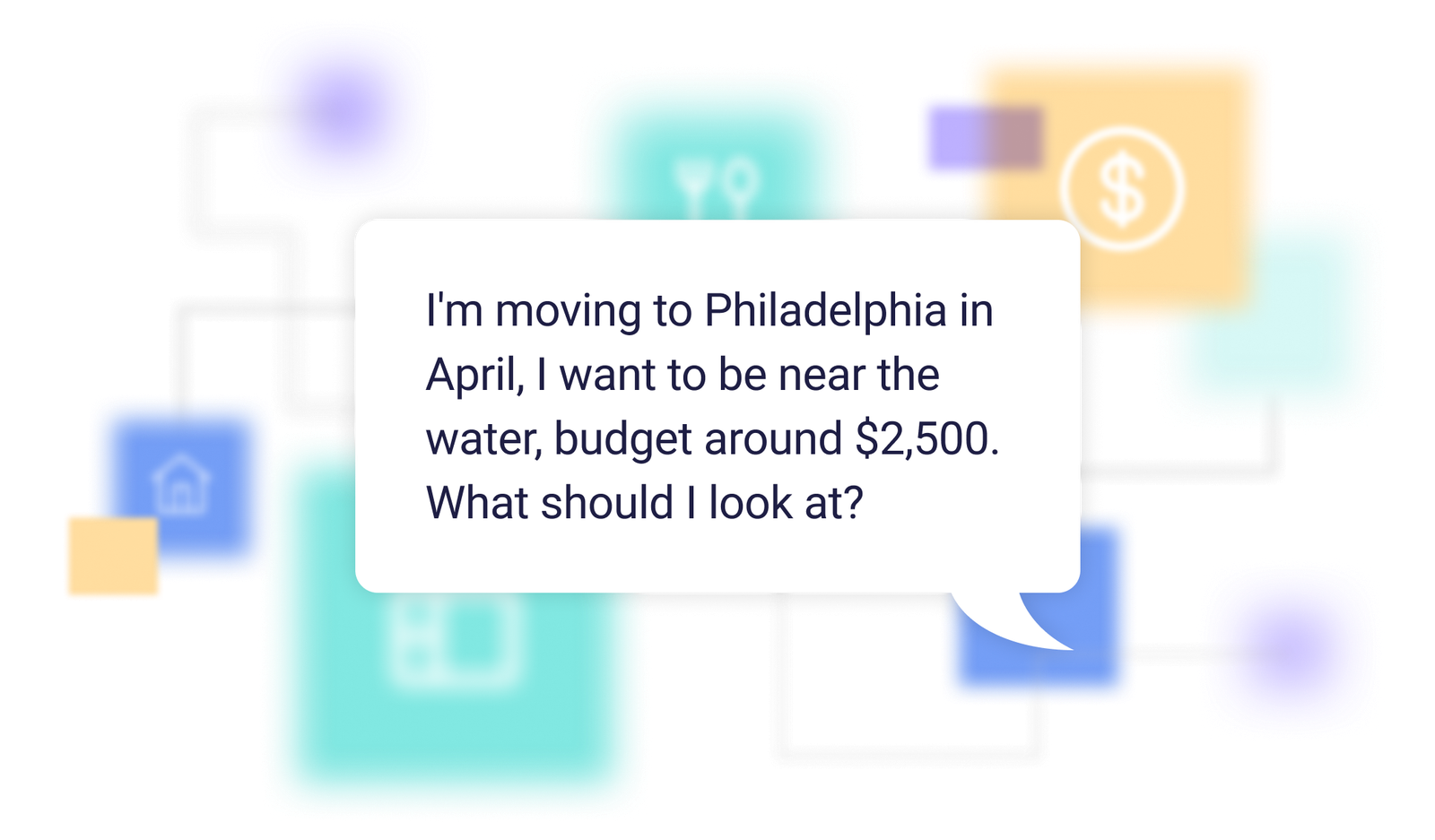
A renter doesn't type "Philadelphia 2BR apartments" into ChatGPT. They say "I'm moving to Philadelphia in April, I want to be near the water, budget around $2,500. What should I look at?" The model fills in the rest from what it already knows about them — that they have a dog, that they work downtown, that they asked about parking last week.
The model interprets that entire conversation and fans out behind the scenes into multiple sub-queries, checking for rent specials, parking details, pet policies, unit-specific features, and assembles a response from whatever it can find. It’s not just looking up a single keyword. If your website or ILS listing doesn't have the depth of content to answer those questions, you simply won't show up.
It's also exactly why traditional SEO tools offering "GEO measurement" fall short. They can tell you whether your brand name got mentioned. They can't tell you how frequently your actual communities and units are appearing in the conversations that drive leasing decisions.
This is not a gradual shift. Over the past two months, we analyzed 250,000+ renter conversations across 60,000 multifamily communities. The data was pretty eye opening: 75% of communities never surfaced in LLM answers, while the top 5% captured more than half of all mentions. The distribution of AI search visibility isn't a gentle slope, it's a cliff.
What Actually Moves the Needle in Multifamily
So if brand monitoring and sentiment analysis are the wrong tools, what's the right framework?
The shift is from keyword-level visibility to unit-level discoverability. Renters are interacting with ChatGPT and Gemini not as search engines but as answer engines. They don’t want to be directed to a website full of listings that they’ll have to sort through. They're asking about a specific type of unit in a specific neighborhood at a specific price point. Your goal is to make sure that when a renter asks about exactly what you offer, your community shows up as the answer — not a competitor's.

Some good places to start:
Structured, machine-readable data.
LLMs are moving away from expensive web crawling toward structured, machine-readable data they can use to answer questions cheaply and confidently. Pricing, unit specs, and amenity data in formats like schema.org matter — not for renters, who never see them, but for the models that do.
Close the JavaScript gap.
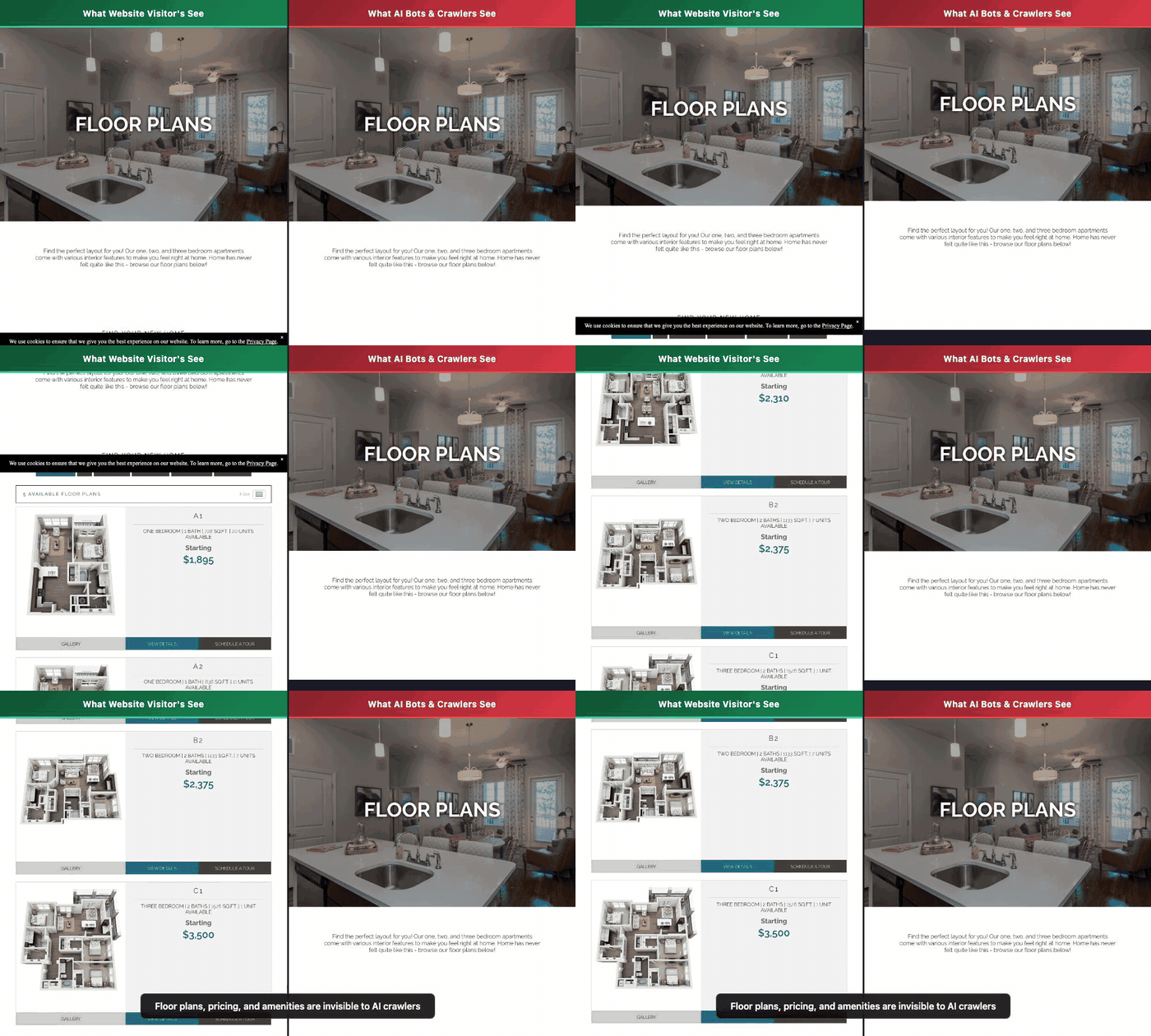
LLM crawlers don't render JavaScript, which means your dynamic pricing grid, your interactive floor plans, your availability widget are all potentially invisible. Our team recently pulled up a side-by-side of what a human sees on a property site versus what an AI crawler sees on the same page. The human sees full pricing, unit details, availability. The AI sees a few sentences. If your most important information only exists inside JavaScript widgets, no amount of SEO spending will fix it.
ILS listings that actually inform.
Treat your Zillow and Apartments.com descriptions as AI-readable documents, not just renter-facing copy. Include plain-language pricing ranges, specific unit features, neighborhood context, and commute information. Give the model something to work with.
Unit-level detail, not just community-level summaries.
A description that says "we offer one, two, and three bedroom apartments" doesn't help a model answer "do you have any two-bedrooms under 900 square feet with balconies available in March?" Unit-level data is what makes individual apartments discoverable in highly specific conversations.
If you’re wondering how your community is actually showing up in LLMs, we built Peek Discover to answer that. It simulates real renter questions, runs thousands of prompts across major LLMs, and shows where (and how often) your properties, units, and amenities appear.
You can pull a free report here. And if you want to swap notes on LLM marketing, unit-level tours, or your favorite brand of soap, my inbox is open at audrey@peek.us.